
I am fortunate to have a growing, library of photography books. For me, inspiration comes from many sources and looking at images from some of the greats of photography is definitely one of the best ways to motivate myself to go out there and creatively interpret their ideas in my own way.
It’s not just the images which I find motivational but also the words these photographers write. The best photographers can sum up in a sentence or two what photography is really about for them which I find helps me understand better my own approach to this art form.
I thought a nice little project would be to use some of the quotes I like best and interpret them using my own images, either new ones or those from my archive. Here are ten such quotes with my own images supporting them.
1. Helen Levitt
“Children used to be outside. Now the streets are empty. People are indoors looking at television or something.”
Helen Levitt
Helen Levitt was an American photographer and cinematographer. She was particularly noted for her street photography around New York City in the 1930s and 1940s, particular her images of children playing on the streets.
My image below of the young boy playing ball with his dog was taken in Blackpool in 1979. It’s one of my earliest street photographs scanned from the original Ilford HP5 negative.

2. Jeanloup Sieff
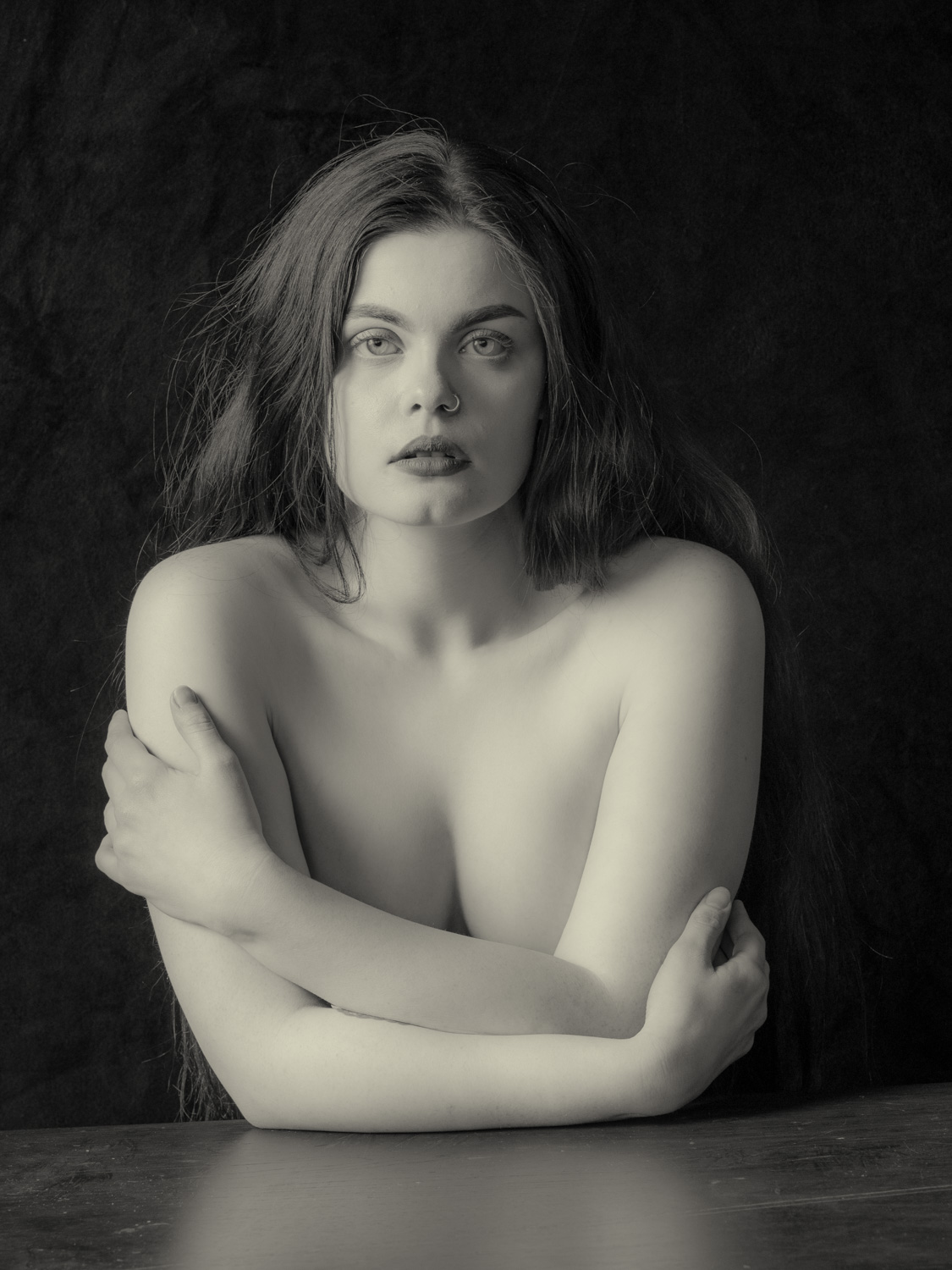
“There are no reasons for my photographs, nor any rules; all depends on the mood of the moment.”
Jeanloup Sieff
This is my favourite quote from one of my all time favourite photographers. Jeanloup Sieff was a French fashion photographer who was equally well known for his black and white portraits, landscapes and nudes. This quote sums up his (and my) approach to photography – make images according to what your mood at the time dictates. I could have chosen one of many images of my own from those photographic genres Sieff worked in but thought I would choose the following in the style contained in his book Torsi : Torses Nus.
3. Saul Leiter
“I go out to take a walk, I see something, I take a picture. I take photographs. I have avoided profound explanations of what I do.”
Saul Leiter
Saul Leiter (like Fred Herzog) spent much of his time photographing the streets of Manhattan rarely venturing more than a few blocks from his apartment. In some ways he just photographed the mundane and the familiar – the things we all see but often take for granted. Until, that is, we look at the images years later and say, “oh yes, it was like that then wasn’t it, how strange/better/different everything was then”. Just walking out with your camera and just photographing what you see is easy to do but not so easy to get right. Leiter was a master at getting it right.
In this picture I was in my local stomping ground, Birmingham ,UK, in this instance photographing the crowds who had turned out to watch the kings coronation on a big screen in the city centre. This being Britain, it was raining but that did not stop die-hard royalists like this couple who had come prepared. They had their brollies, their Union Jack bowler hats as well as beers and a packet of crisps. Could it be any more British?

4. Fred Herzog
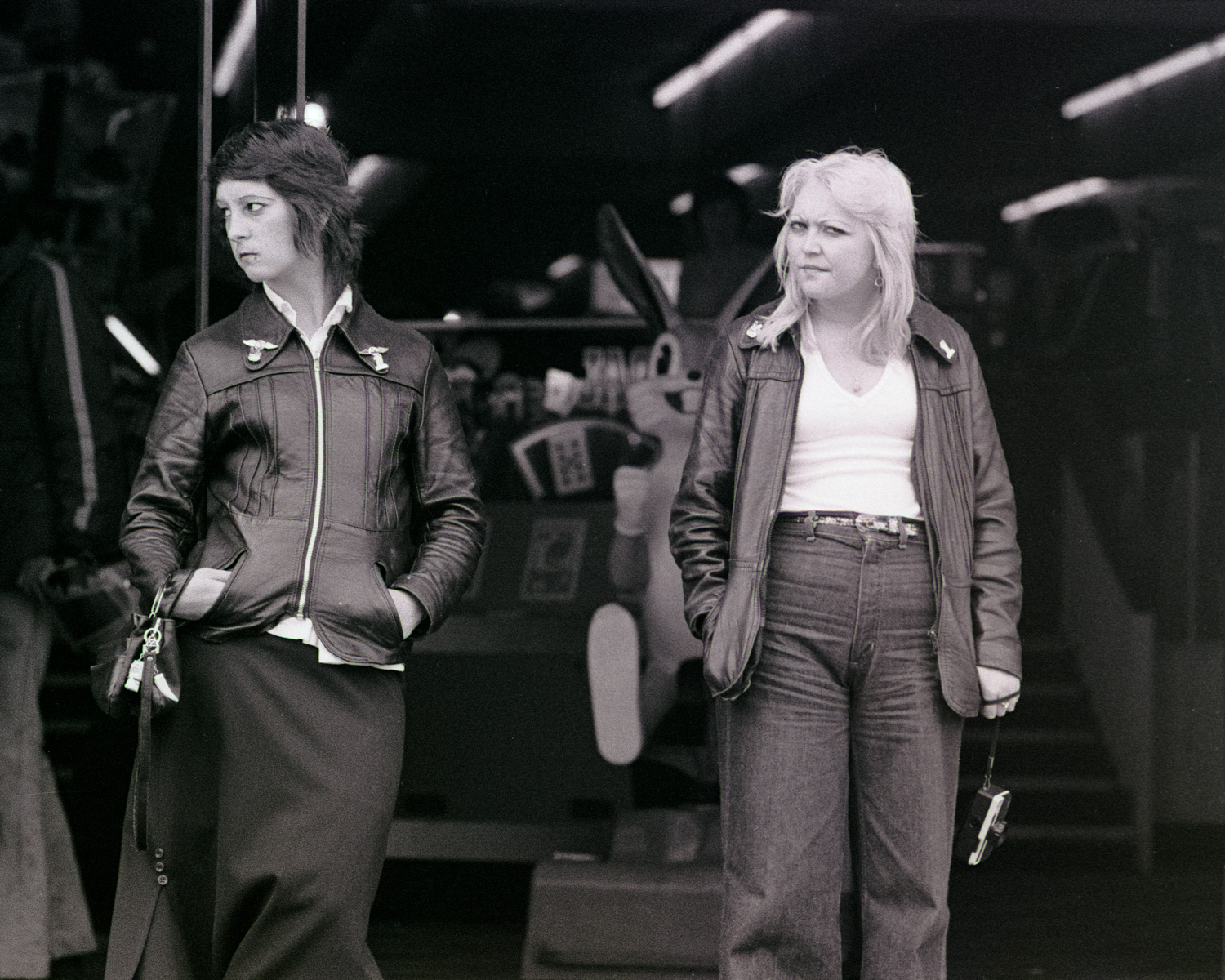
“Many gestures disappear in an instant, but a posed picture doesn’t look real. You must not deprive people of their real body language. That is why I shoot from the hip. I don’t raise the camera up to my face. I don’t ask for permission. I never talk about it with them first.”
Fred Herzog
Fred Herzog was a German-born Canadian photographer who spent much of his artistic life walking the streets of Vancouver, unusually for street photographers, using colour slide file.
The book I own about Herzog, Fred Herzog: Modern Color, as you would expect, is mainly his colour street work so why this black and white image of mine as inspiration? This was taken in Blackpool in 1979 so is one of my very early street photographs. Not knowing what I was doing particularly I saw these two girls standing outside an amusement arcade and, more out of fear than anything else, pointed my camera at them from waist level and snapped this image. Remember, this was pre-digital so I had no idea what I had until I developed the film over a week later. First I was amazed it was not only properly exposed but also framed the two girls really well. Second I realised the blond girl had rumbled what I was doing and given me the evil eye. I think this very much adds to the image however and really illustrates what Herzog means about not asking permission – something I still rarely do 45 years later.
5. Gary Winogrand
“When I’m photographing I see life.”
Gary Winogrand
Garry Winogrand was an American street photographer known for his portrayal of U.S. life and its social issues in the mid-20th century. If you read any of the work of current street photographers (for example Joel Meyerowitz or Matt Stuart) they claim to have been influenced by Winogrand. In some ways. Winogrand, it seems to me, was a gentler, less in-your-face, version of Bruce Gilden as you might see from the images here.
The image below was taken in Birmingham, my hometown, way back sometime between 1977 and 1979). I love the slightly askance look the couple walking by the bench are giving the rough sleeper whilst one of the two lads on the bench next to him seems to have spotted me and looking on in an equally suspicious way.

6. Helmut Newton
“I hate good taste. It’s the worst thing that can happen to a creative person.”
Helmut Newton
Helmut Newton relished his bad boy reputation as a photographer making images that would probably not be tolerated today. He certainly raised the ire of the American writer, feminist and critic Susan Sontag who when she heard Newton say he “loved women” replied “well, that’s what a lot of mysoginists say”.Ouch! Like him or loathe him Newton’s fashion photography certainly moved the genre in new directions.
This image of the model Allex was taken at a photography studio which adjoined a farm and group of workshops including a junk yard where we came across this dirty old container.

7. Henri Cartier-Bresson
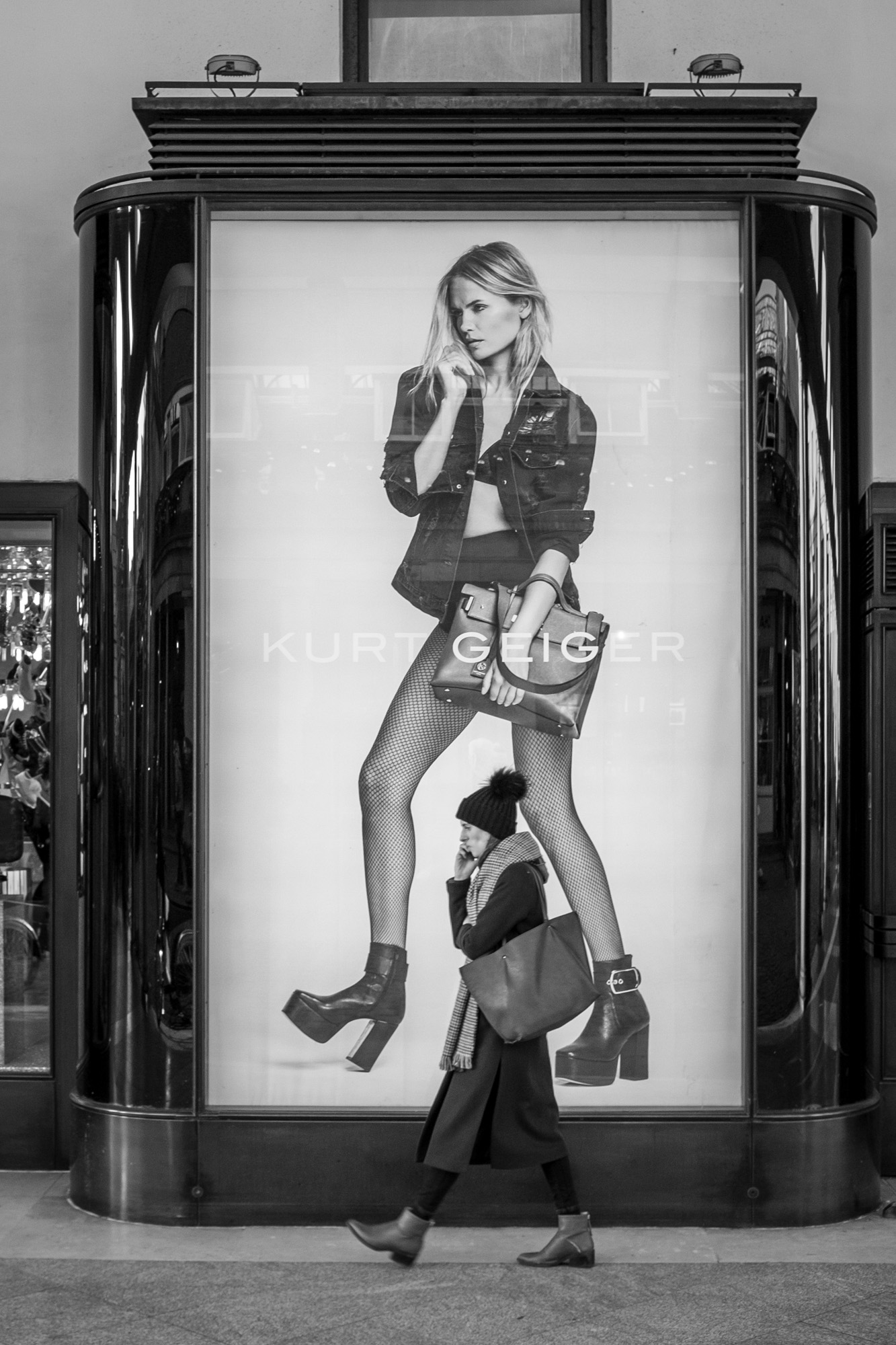
“Of all the means of expression, photography is the only one that fixes forever the precise and transitory instant. We photographers deal in things that are continuously vanishing, and when they have vanished, there is no contrivance on earth that can make them come back again.”
Henri Cartier-Bresson
Cartier-Bresson needs no introduction. He may not have invented the genre of street photography but he was certainly one of its greatest practitioners. The above quote comes from his wonderful book of essays called The Mind’s Eye. This quote comes from the chapter called The Decisive Moment, a phrase used by him to describe that split-second that captures a scene’s meaning.
Whilst we mere mortals can never capture the meaning in images in the way Cartier-Bresson did I like to think that this image which juxtaposes the woman walking along wearing her everyday clothing with the picture of a model wearing what the fashionista’s would have her wearing.
8. Alex Webb
“I only know how to approach a place by walking. For what does a street photographer do but walk and watch and wait and talk, and then watch and wait some more, trying to remain confident that the unexpected, the unknown, or the secret heat of the known awaits just around the corner.”
Alex Webb
Alex Webb was born in San Francisco in 1952 and is a full member of the Magnum photo agency. Webb is known for his bright, vibrant colour photography and for his ‘dislocated’ images which juxtapose unlikely colours, situations and people in a single frame. Webb’s book, Dislocations is a mad, vibrant and eclectic collection of 80 such frames from all over the world.
I came across this upturned house whilst on a visit to Milton Keynes earlier this year (actually to visit the Saul Leiter exhibition at the MK Gallery). The bright colours and unlikely scenario were too good to not photography despite being confronted by a security guard about needing permission.

9. Don McCullin
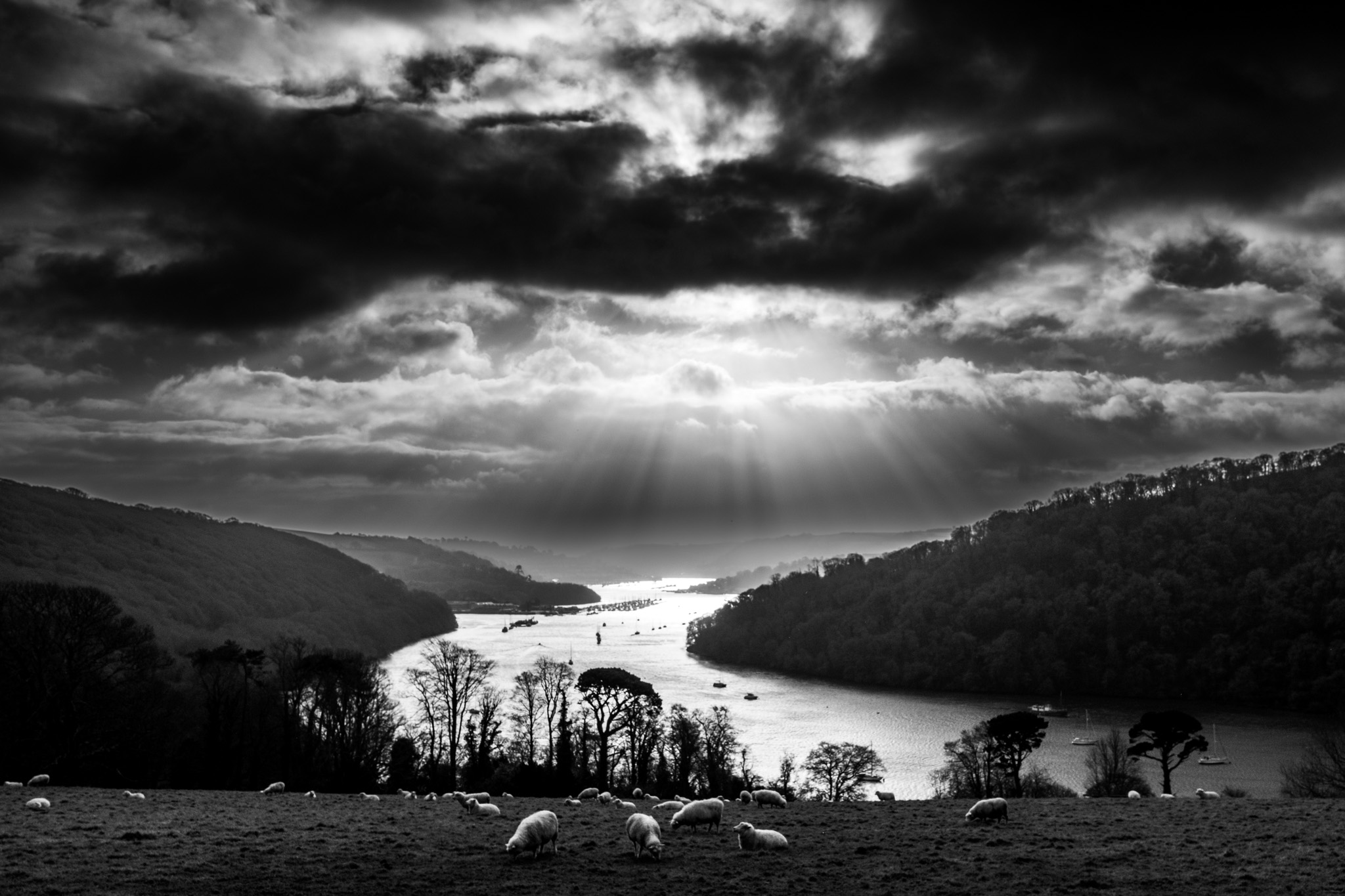
“The great thing about landscape is that you owe nothing to fear. It’s all yours, no one can say you’re doing the wrong thing morally, there’s not a human being that can come up and say, “Why are you taking my picture?”
Don McCullin
Don McCullin was one of the biggest influences on me becoming a photographer. As related here I first came across his work in an anthology called The Concerned Photographer back in the mid-70s. McCullin is best known for his conflict photography but in his later years has spent time around his home in Somerset photographing landscapes. In many ways McCullin’s landscapes are as dark and foreboding as his conflict images but as he says here, at least he is not threatened to be shot for capturing these.
This image is taken in Devon, not too far from McCullin’s Somerset, showing where the river Dart meets the English channel in the distance. I liked the cloud structure and the late afternoon light over Dartmouth. I purposely processed this in the style of one of McCullin’s photographs.
10. Diane Arbus
“I tend to think of the act of photographing, generally speaking, as an adventure. My favorite thing is to go where I’ve never been.”
Diane Arbus
Diane Arbus was an American photographer who photographed her subjects in familiar settings: their homes, on the street, in the workplace, in the park. She was, in her time, considered to be quite controversial as she pushed the bounds of who, for the 1960s, it was considered acceptable to photograph, for example strippers, carnival performers, nudists, people with dwarfism.
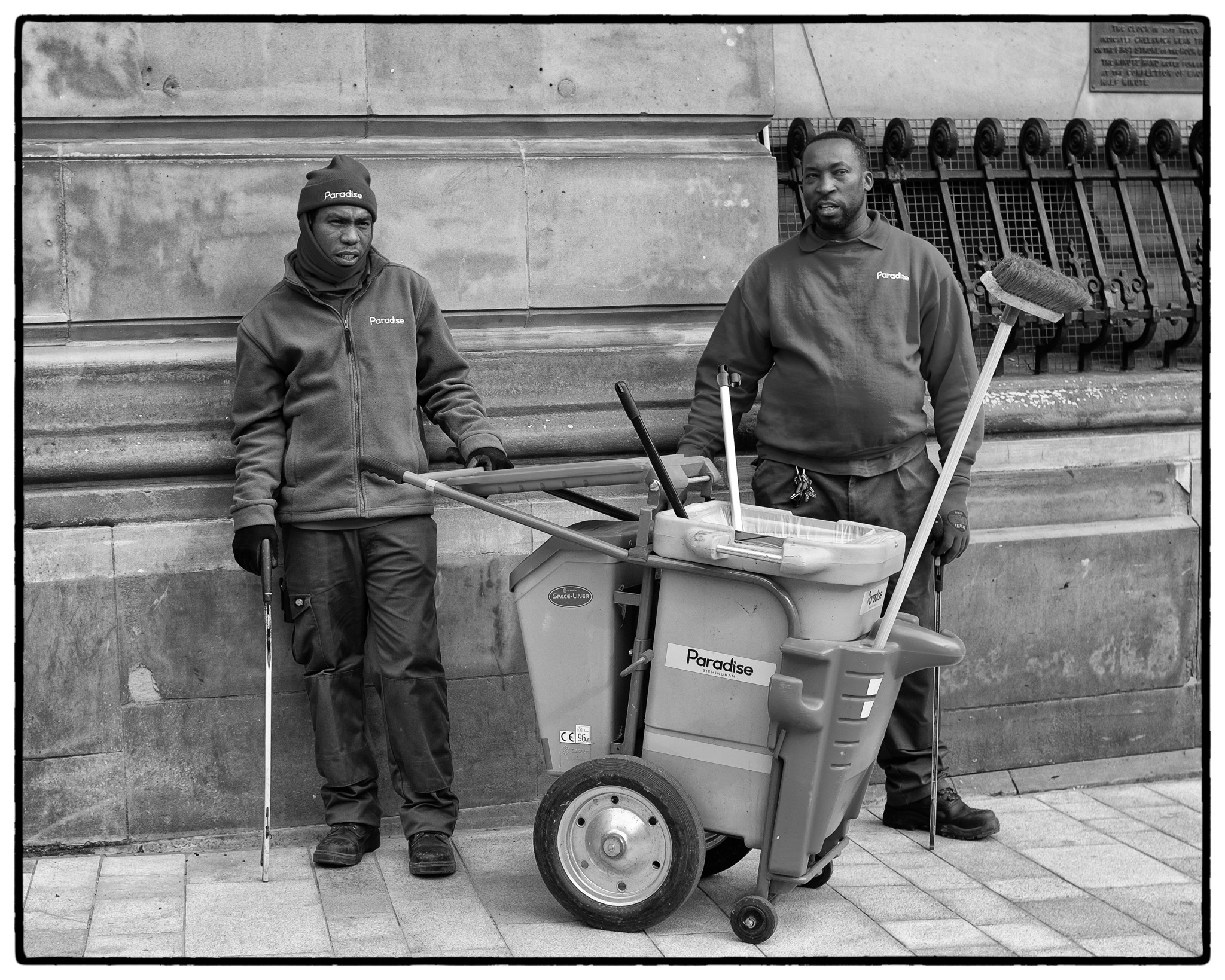
Arbus’ style was to take her photos head-on with her subject fully aware of what she was doing. As far as I know there was never any intent to conceal her camera as was the approach of Fred Herzog for example. In my image I captured the two street cleaners in the newly constructed area called ‘Paradise’ in Birmingham City Centre. This name has always struck me as slightly ironic – it being as far away of traditional images of what paradise would be for most people I suspect. However, it would appear even paradise needs streets cleaners.
11. Henri Cartier-Bresson
“Sharpness is a bourgeois concept.”
Henri Cartier-Bresson
A bonus quote the image for which is at the top of this post and discussed in more detail here.

 Peter Cripps
Leave a comment