“Part of the reality of making images is that they are flexible: they can be read in singular ways, as individual “heads” in a picture, or they can be read in global ways, with universal meanings about culture, society and the time in which the image was made?“
Joel Meyerowitz, How I Make Photographs
Great street photography tells a story or conveys a message about the human condition, society, culture, or daily life. When out and about on the street look for scenes or moments that hint at a larger narrative or provoke thought and reflection.
How and if people ‘read’ and understand your story will depend on how you direct their eye using composition or how you lay out the images. Of course they may not see the same story as you but that’s okay. Sometimes people may interpret images in a different way from that intended by the photographer and add new meaning in so doing.
I have found that when I’m out photographing on the streets it is not always with the intent of making images which capture a story but rather it is something that develops as you move around and realise there are a number of things happening that can in fact be linked together in a storyline. A couple of examples of mine that I have published previously are Paradise Lost capturing the now demolished Brutalist architecture around Birmingham as well as a series of images from Birmingham’s Big Hoot, featuring 89 giant owl sculptures in and around the city.
A story, in photographic terms can be anything from a whole book to a single image.
Clearly in a book the photographer has ample time and space within which to develop a storyline. In his book The Americans, Robert Frank tells a powerful visual story about American society in the 1950s, capturing candid moments that provide insight into the culture and values of the time.
A story can also be captured in a single image. One of my all time favourite pictures which I believe does this is Café de Flore by Jeanloup Sieff. The Café de Flore is one of the oldest coffee houses in Paris, celebrated for its famous clientele, which included high-profile writers and philosophers. Sieff’s image is taken from within the cafe and you can almost imagine him watching people – especially the women – as he sits at his table watching the world go by.
Also Vivian Maier’s photographs from the streets of Chicago tell stories about urban life in the mid-20th century offering insights into societal norms and cultural values of the time.
Two books that have helped my think about, and hopefully improve, my storytelling are:
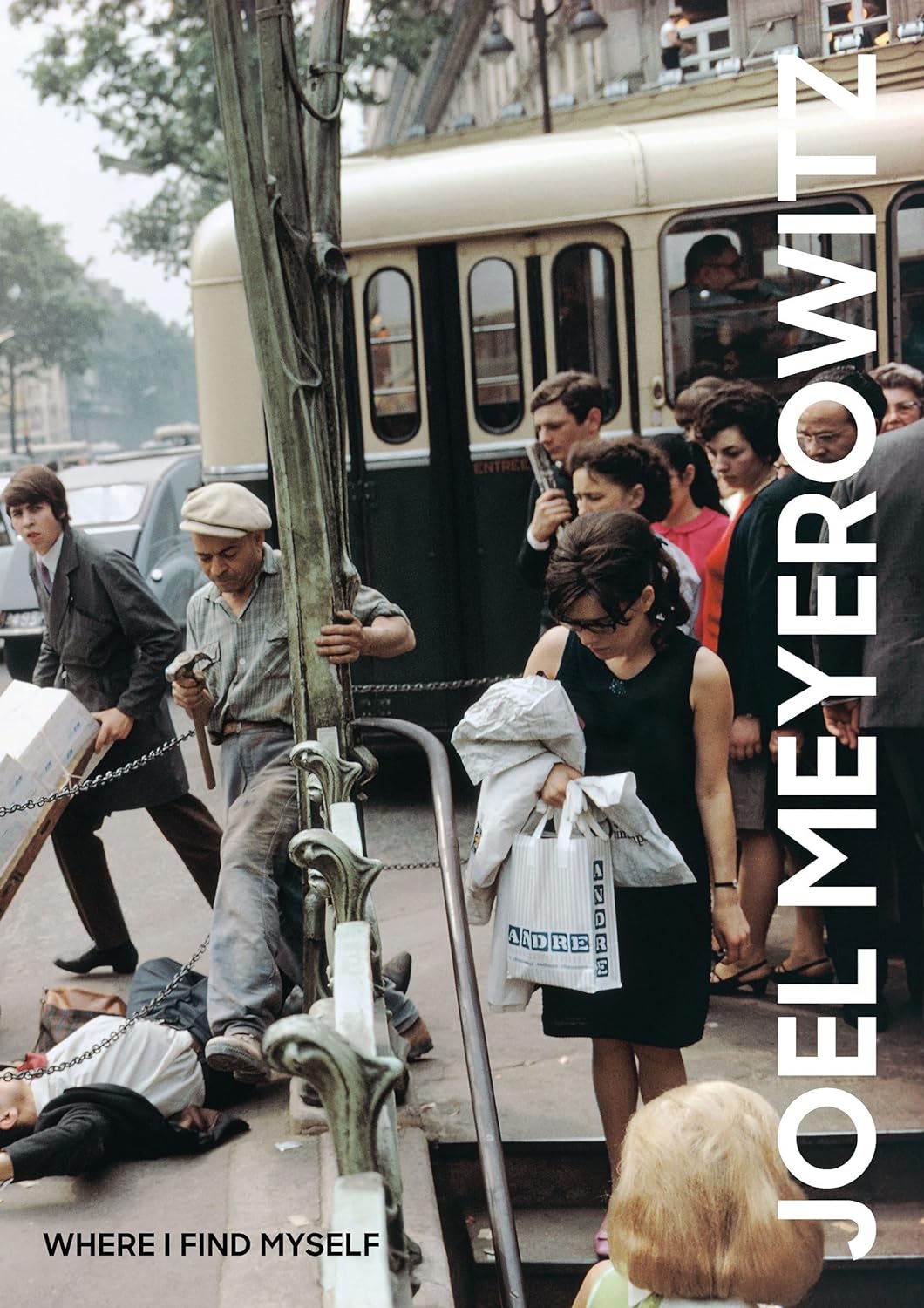
Where I Find Myself: A Lifetime Retrospective by Joel Meyerowitz
This book covers all of Meyerowitz’s great projects: his work inspired by the artist Morandi, his work on trees, his exclusive coverage of Ground Zero, his trips in the footsteps of Robert Frank across the US, his experiments comparing colour and black and white pictures, and of course his iconic street photography work.

Jeanloup Sieff: 40 Years of Photography
Covers 40 years of Sieff’s photography, encounters and memories. It collects together his major photographs, and shows how Sieff has left his mark on his generation.
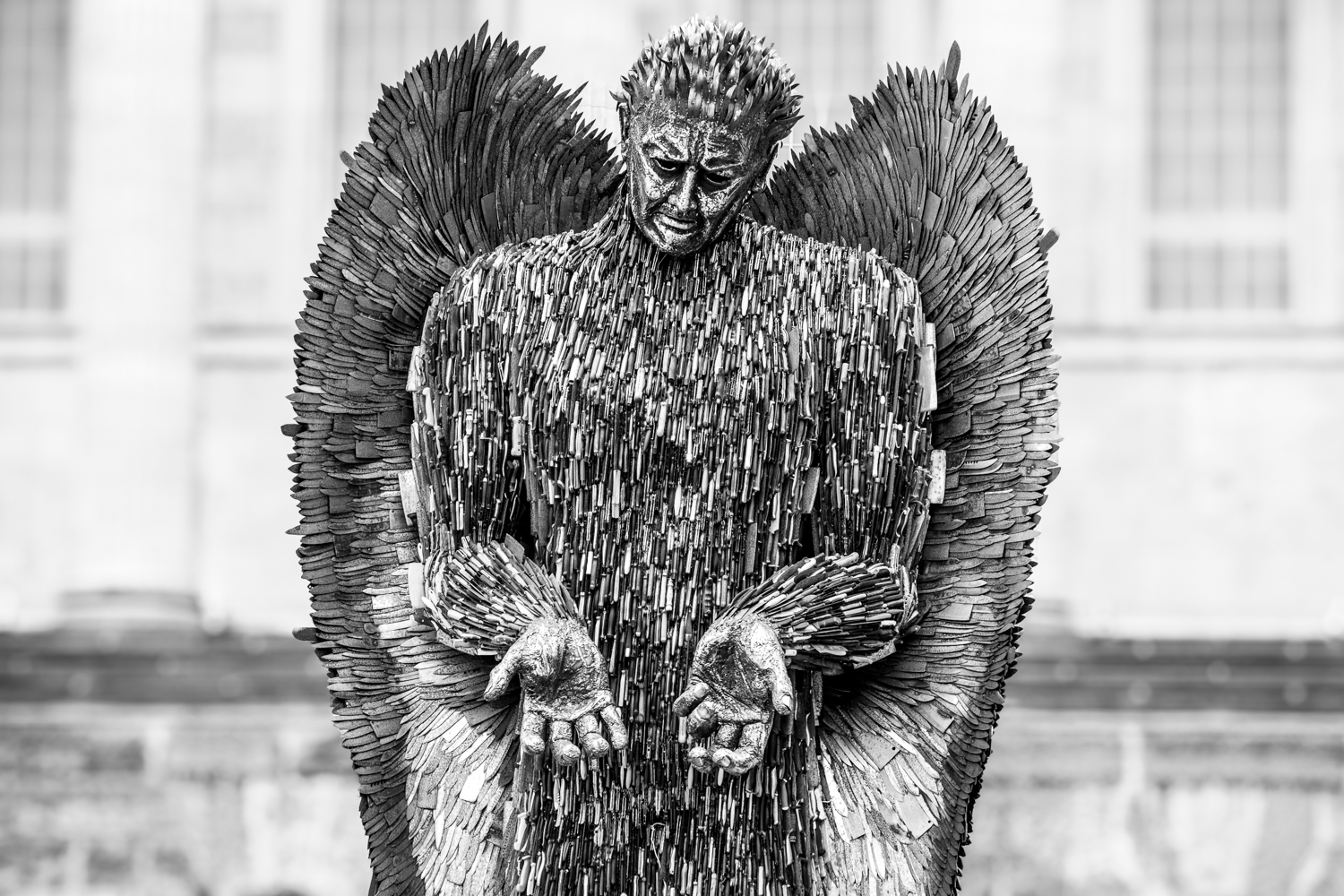
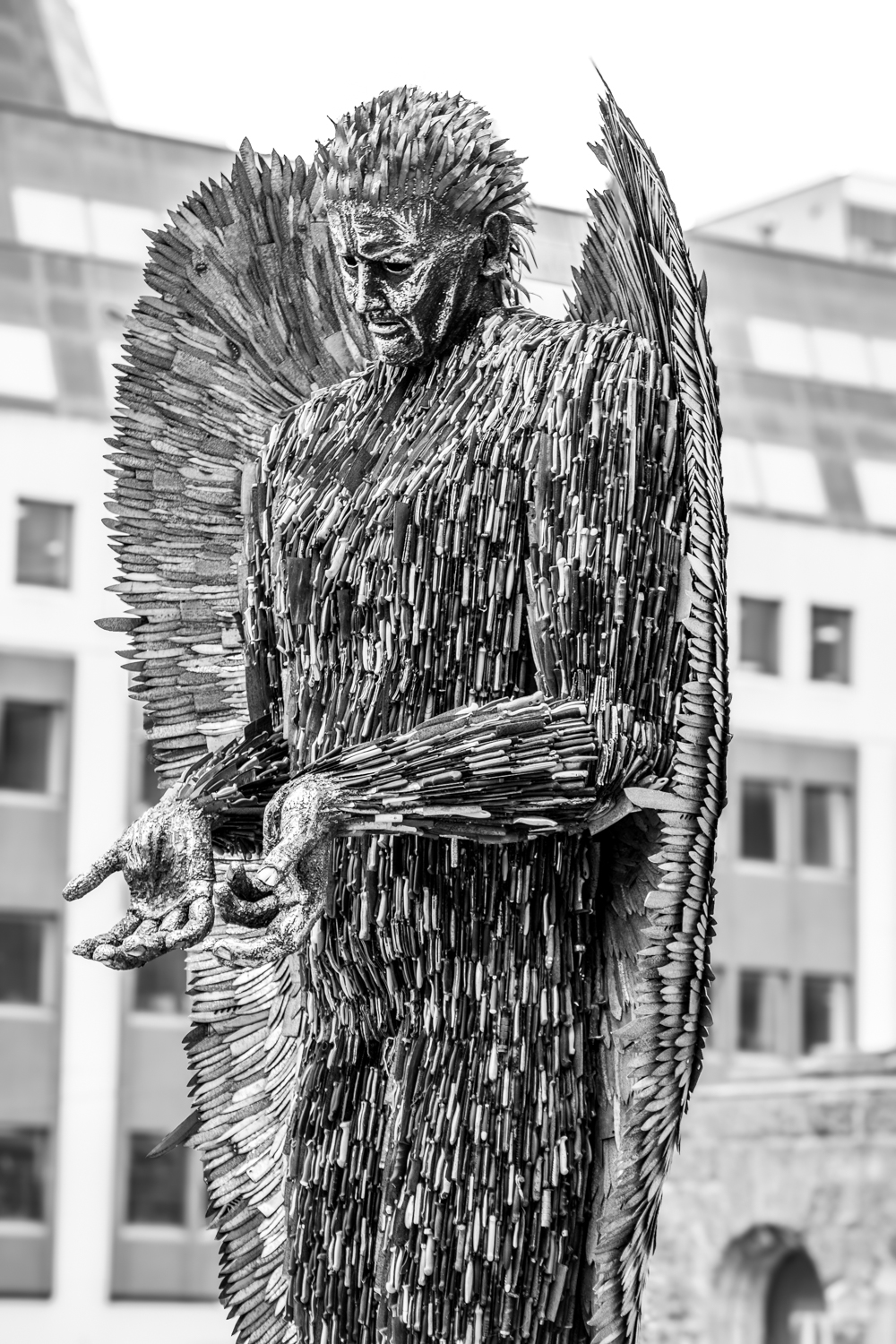
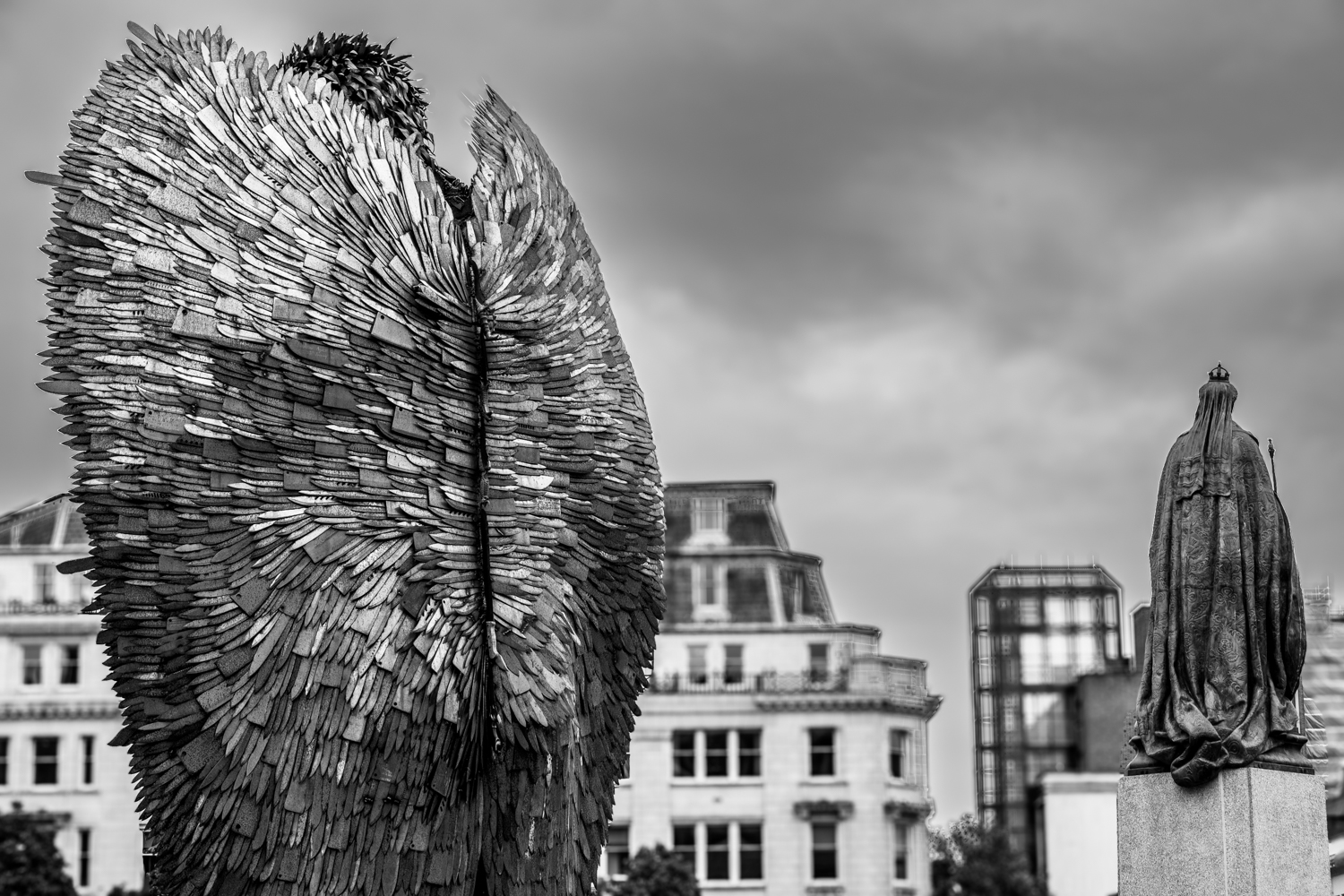
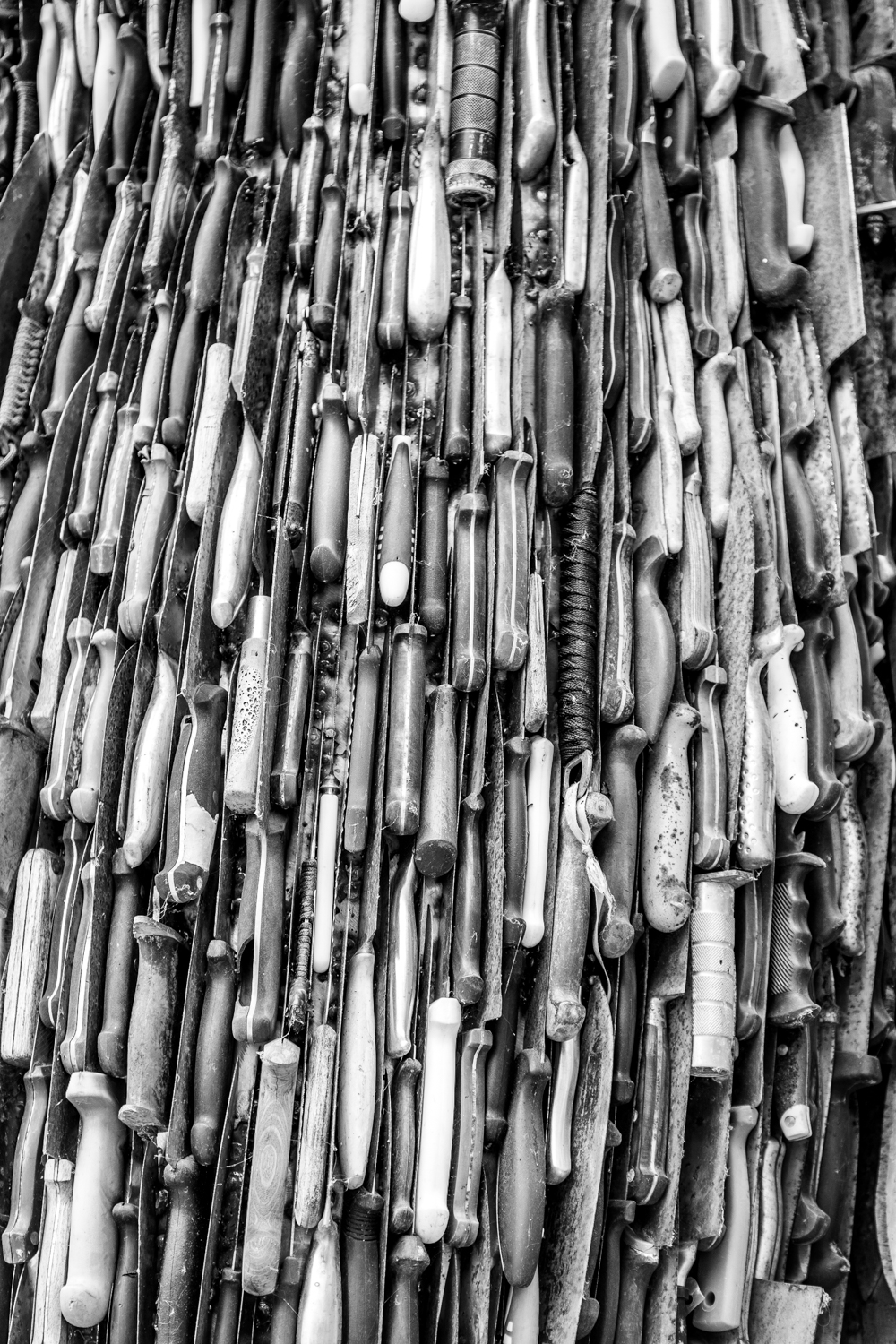
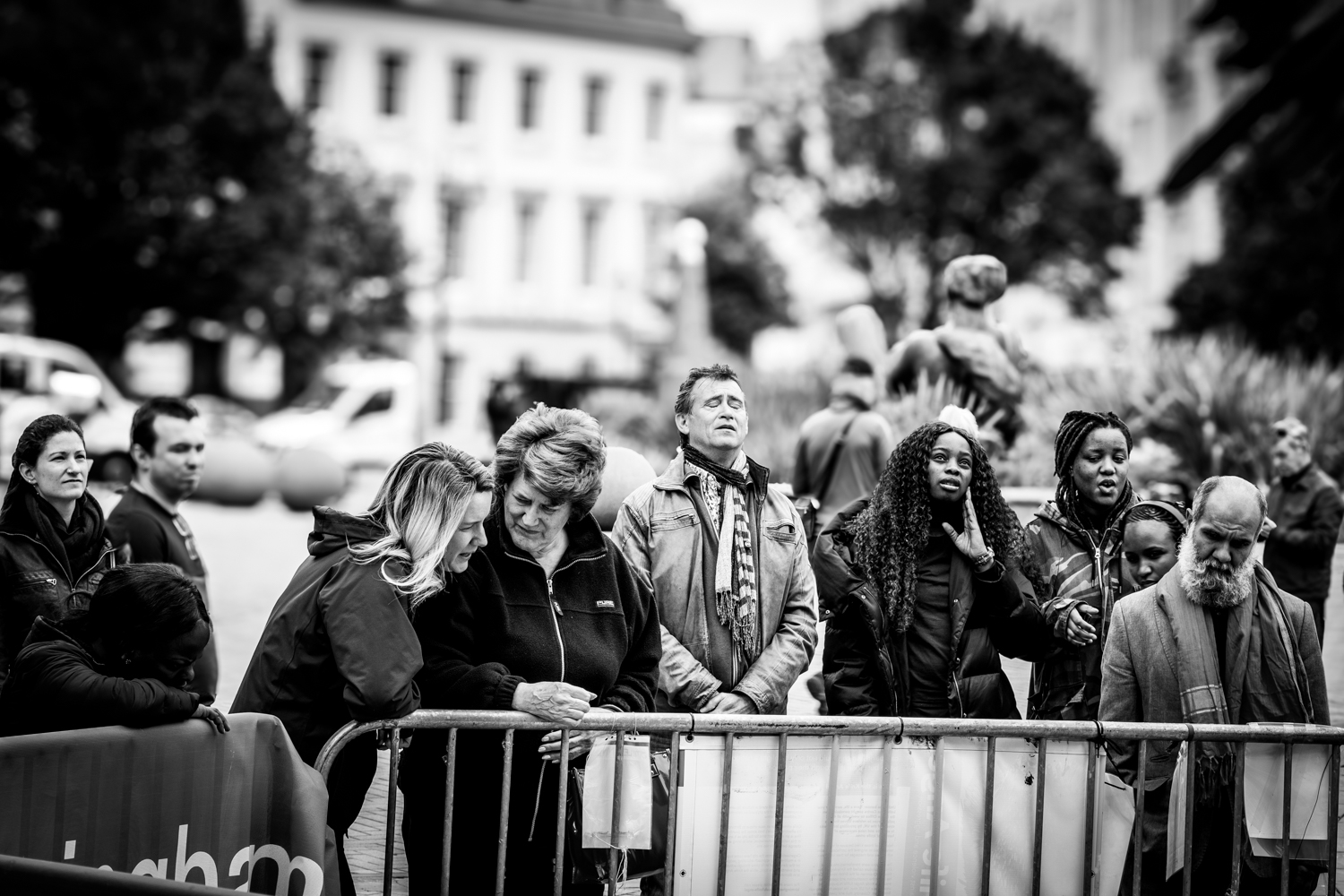
The story below is on the visit of the “Knife Angel” to Victoria Square in Birmingham in 2019.
The “Knife Angel” is a huge 27-foot sculpture commissioned by the British Ironwork Centre in Oswestry, Shropshire and was created by the artist Alfie Bradley. After the Home Office granted the British Ironwork Centre permission to collect 100,00 confiscated knives from knife bins across the country, it took four years to build the Knife Angel as a response to rising reports of knife crime, and lives being lost to knives.
Wherever the knife angel has visited, it has been a calling point for action with the aim of bringing people together and provide a physical reminder of the effects of violence and knife crime on (mainly) young people.
My intention for this story was to show the Knife Angel in its surrounding context (Victoria Square is named after the statue of Queen Victoria which can be seen in one of my images) and then gradually zoom in on the detail showing the individual knives. The final image shows a small crowd looking at the status and the obvious affect it has on these people.


 Peter Cripps
Leave a comment